Brainstem Glioma Treatment
- incisionary
- Apr 13
- 2 min read

Brainstem gliomas refer to tumors, typically astrocytomas, located in the brainstem. They may develop in different brainstem regions: midbrain and medulla gliomas are usually low grade (grade I), while pons gliomas are usually grade IV due to their faster growth and progression. The brainstem generally controls many critical functions including breathing, swallowing, and heart rate. Thus, the treatment for these tumors require careful consideration. The three typical treatments include:
Focal radiotherapy
A cornerstone in brainstem glioma treatment, widely considered standard upfront therapy due to the stability it provides the patient’s condition. The conventional radiotherapy dose is from 54-60 Gy, but the response to the dose is dependent on tumor location and histologic type, among other factors. Exophytic tumors (projecting outwards from the surface) have better survival rates with radiotherapy than tumors without an exophytic component.
Chemotherapy
Conventional agents for brainstem glioma chemotherapy include temozolomide and carboplatin/vincristine. Antiangiogenesis agents like bevacizumab have shown inconsistent success in supratentorial glioblastomas (grade IV astrocytomas in the cerebral lobes), making their effect on brainstem gliomas unclear. Studies suggest that patients may benefit in the short term, but suffer worse outcomes than supratentorial glioma patients. In August 2025, the US Food and Drug Administration approved dordaviprone to treat diffuse midline gliomas with an H3K27M mutation in adults and pediatric patients aged 1 year and above who have progressive disease following prior therapies.
Surgical care
Resection is performed conjunctly with radiotherapy, chemotherapy, or both. It is most appropriate for the following cases:
Cervicomedullary junction (CMJ) tumors (found at the intersection of the medulla and spinal cord)
Dorsal exophytic tumors that protrude into the fourth ventricle
Cystic tumors
Tumors with clear margins and space-occupying effect
Benign tumors (with slow progression)
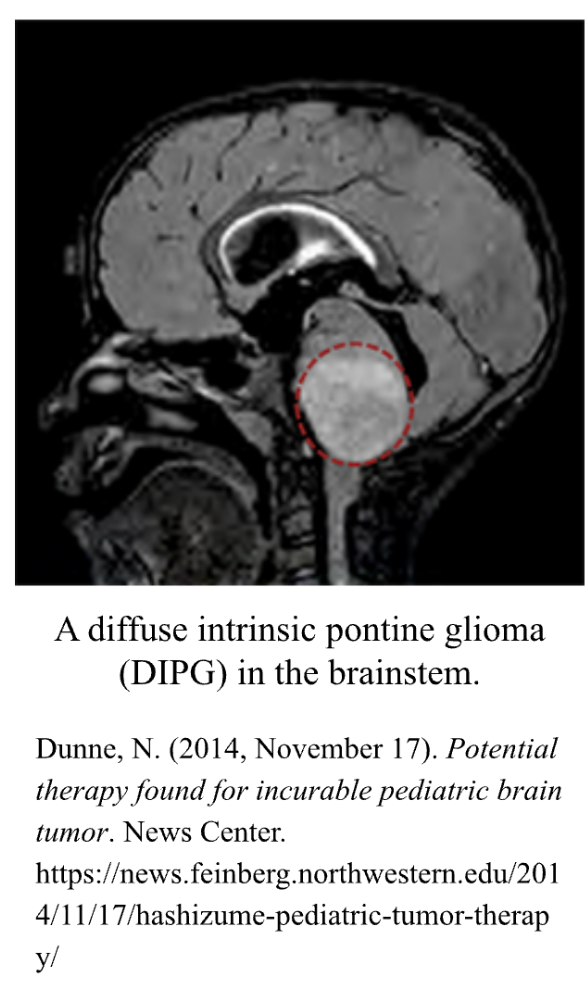
Overall, brainstem gliomas are some of the most notorious cancer growths being actively researched. The treatment course widely depends on the severity of the progression, the overall health and endurance of the patient, and the risk imposed on the patient’s life.
Written by Hana Shqairat at Incisionary
References
Cevering, C. (2025, November 5). Brainstem Gliomas treatment & management. Approach Considerations, Pharmacologic Therapy, Surgical Care.
UCSF Brain Tumor Center. (n.d.-b). Brainstem glioma. Brainstem Glioma . https://braintumorcenter.ucsf.edu/condition/brainstem-glioma
Dunne, N. (2014, November 17). Potential therapy found for incurable pediatric brain tumor. News Center. https://news.feinberg.northwestern.edu/2014/11/17/hashizume-pediatric-tumor-therapy/


Comments