Cleft Lip Repair
- incisionary
- Jul 19, 2025
- 3 min read

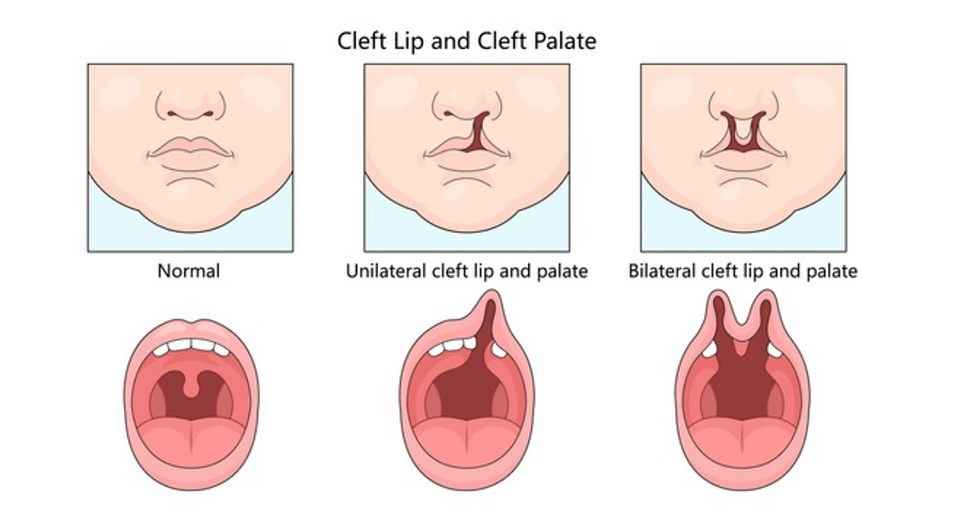
Normally, as a baby is developing the left and right sides of their lip, the roof of the mouth starts to grow separated; over time, they join together forming a singular body part. A cleft lip however, is a birth defect where the two sides of a baby's upper lip is left open due to the tissue never connecting. Similarly if the opening reaches the roof of the mouth it is called a cleft palate. Cleft lips take on a variety of forms on either side (or sometimes both sides) of the mouth and can be small or reach as high as the nasal cavity. This defect is actually much more common than people think with about 1 in every 1,050 babies being born with a cleft lip. In fact, some studies even suggest a smaller ratio.
Cleft lips are genetic. It is more likely for a baby to be born with a cleft lip if one or more of their parents also had a cleft lip. But this isn't the only cause as many children still have a cleft lip without either of their parents sharing the gene. Environmental factors such as taking a certain medication during the baby's development process can also be the cause. However cleft lips usually happen without any clear indicator and can not be predicted or treated in any way before birth.
Cleft lips are usually dealt with through surgery. If not, a variety of health problems can occur. Babies may have trouble eating, breathing, and even having language issues as they grow older. They are more likely to have ear and teeth problems as they age if not treated. The surgery is usually completed before the child turns a year old, most commonly taking place at around three to six months old. During surgery, incisions are cut on the sides of the cleft and are drawn together with stitches. The process takes around two hours and the baby is under either general anesthesia or sedation that is inserted through the veins.
A cleft palate surgery is done months after a cleft lip surgery and is slightly more complicated. Once again, incisions are made on either side of the palette and the layers of tissue are sometimes stretched if needed to be carefully sewn together. This process takes around two to three hours but times vary.
The scar from this surgery lightens over time and babies are able to grow up and live completely normal lives. Since this procedure can be commonly done, it is important to be informed about cleft lips and the surgeries that fix them. With thousands of these surgeries happening it is extremely beneficial in helping children to live healthy lives without the risk of eating or breathing problems in the future.
Written by Jada Gadoros at Incisionary
APA References
Cleft Lip and Cleft Palate Repair Procedure Steps. (n.d.). American Society of Plastic Surgeons. https://www.plasticsurgery.org/reconstructive-procedures/cleft-lip-and-cleft-palate-repair/procedure
Cleveland Clinic. (2022, June 13). Cleft Lip & Cleft Palate Surgery: Repair Steps & Post-op Care. Cleveland Clinic. https://my.clevelandclinic.org/health/treatments/23394-cleft-lip-cleft-palate-surgery
What Causes a Cleft? - What is Cleft Lip & Palate? (n.d.). CLAPA. https://www.clapa.com/what-is-cleft-lip-palate/what-causes-a-cleft/
National Institute of Dental and Craniofacial Research. (2021, January). Cleft Lip & Palate. Www.nidcr.nih.gov. https://www.nidcr.nih.gov/health-info/cleft-lip-palate
Mayo Clinic. (2022). Cleft lip and cleft palate - symptoms and causes. https://www.mayoclinic.org/diseases-conditions/cleft-palate/symptoms-causes/syc-20370985
Mya Care. (2024). CLEFT LIP AND PALATE: SYMPTOMS, CAUSES, TREATMENT, AND MORE.


Comments