How Women Are Leading The Way In Heart Surgery
- incisionary
- Mar 20
- 3 min read

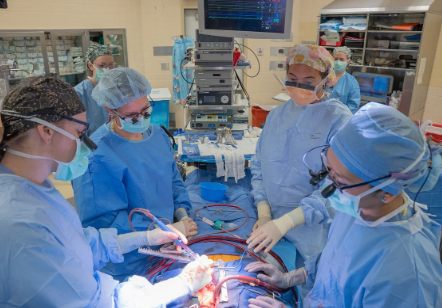
Heart surgery is no longer in a man’s world. Women are now revolutionizing the medical field more than ever. From 2004 to 2022, the number of women in the active physician workforce increased 97%, while the number of men increased 13%. While women have faced multiple barriers throughout their careers, including sexism, unequal pay, and a lack of mentorship, they are leading the way for innovations in heart surgery. As stated by Prince Harry, Duke of Sussex, “We know that when women are empowered, they immeasurably improve the lives of everyone around them—their families, their communities and their countries.”
In 2022, Dr. Amy Fielder and her team led the world’s first all-female heart transplant at UCSF. She is pioneering the latest technology to improve patient outcomes and expand access to life-saving treatment to patients who need it the most. Years after the successful transplant, she is still taking efforts to mentor others, particularly women, as part of UCSF’s work to transform the face and culture of surgery. Dr. Fielder has gotten endless praise throughout the years, and is proof that women can excel in any field, regardless of the barriers and obstacles that they face.
Similarly, efforts from Dr. Hina Chaudhry have caused a massive breakthrough in heart repair when she discovered that reactivating the gene Cyclin A2 can actually cause heart cells to divide and regenerate new heart cells, which is something that scientists never thought could happen. This discovery has led to potential new treatments that can reverse the effects of heart failure or heart attacks, giving doctors a way to permanently repair the damaged heart instead of only relying on medication and reducing the symptoms. Dr. Chaudhry’s actions have shown the world that women are not only capable of working in the medical field but also of fostering ground-breaking discoveries that have the potential to change the future of heart disease treatment and revolutionize modern cardiovascular medicine.
While people may believe that women aren’t as qualified or capable as men in the medical field, they are constantly proving these beliefs wrong. In a study conducted by researchers aiming to analyze the effectiveness of female heart surgeons in heart surgeries, specifically in coronary artery bypass graft and isolated aortic valve surgeries, it was concluded that despite taking longer to perform procedures, female surgeons still received the same success rate and outcomes as their male counterparts. This evidence challenges the belief that women aren’t as accurate or competent as their male counterparts, proving that gender does not determine skill or effectiveness in the operating room. Not only are female heart surgeons revolutionizing the medical field, but also serving as inspiration for women pursuing careers in every field, showing that gender is not a limit to a person’s ambitions.
Written by Henry Tran at Incisionary
References
Boyle, P. (2024, May 28). Women are changing the face of medicine in America. AAMC. https://www.aamc.org/news/women-are-changing-face-medicine-america
Castle, B. (2019, August 14). 23 Quotes from Famous Men Supporting Women & Women’s Rights. InHerSight. https://www.inhersight.com/blog/insight-commentary/quotes-from-men-about-gender-equality
Fatunde, O. A., Grant, J. K., Lara-Breitinger, K., Kizzee, O. P., Savic, J., LeMond, L., & Hayes, S. N. (2025). Gender Disparities in Cardiology. JACC: Advances, 4(4), 101642. https://doi.org/10.1016/j.jacadv.2025.101642
Mount. (2025, November 3). A Specific Human Gene Can Help the Heart Repair Itself From Heart Attack or Heart Failure. Mount Sinai Health System. https://www.mountsinai.org/about/newsroom/2025/a-specific-human-gene-can-help-the-heart-repair-itself-from-heart-attack-or-heart-failure?
Sido, V., Schröter, F., Rashvand, J., Ostovar, R., Chopsonidou, S., & Albes, J. M. (2025). Female Surgeons in Cardiac Surgery: Does the Surgeon’s Gender Affect the Outcome of Routine Coronary Artery Bypass Graft and Isolated Aortic Valve Surgery? The Thoracic and Cardiovascular Surgeon, 73(3), 206–213. https://doi.org/10.1055/s-0044-1786182


Comments